Winged Bean

Psophocarpus tetragonolobus

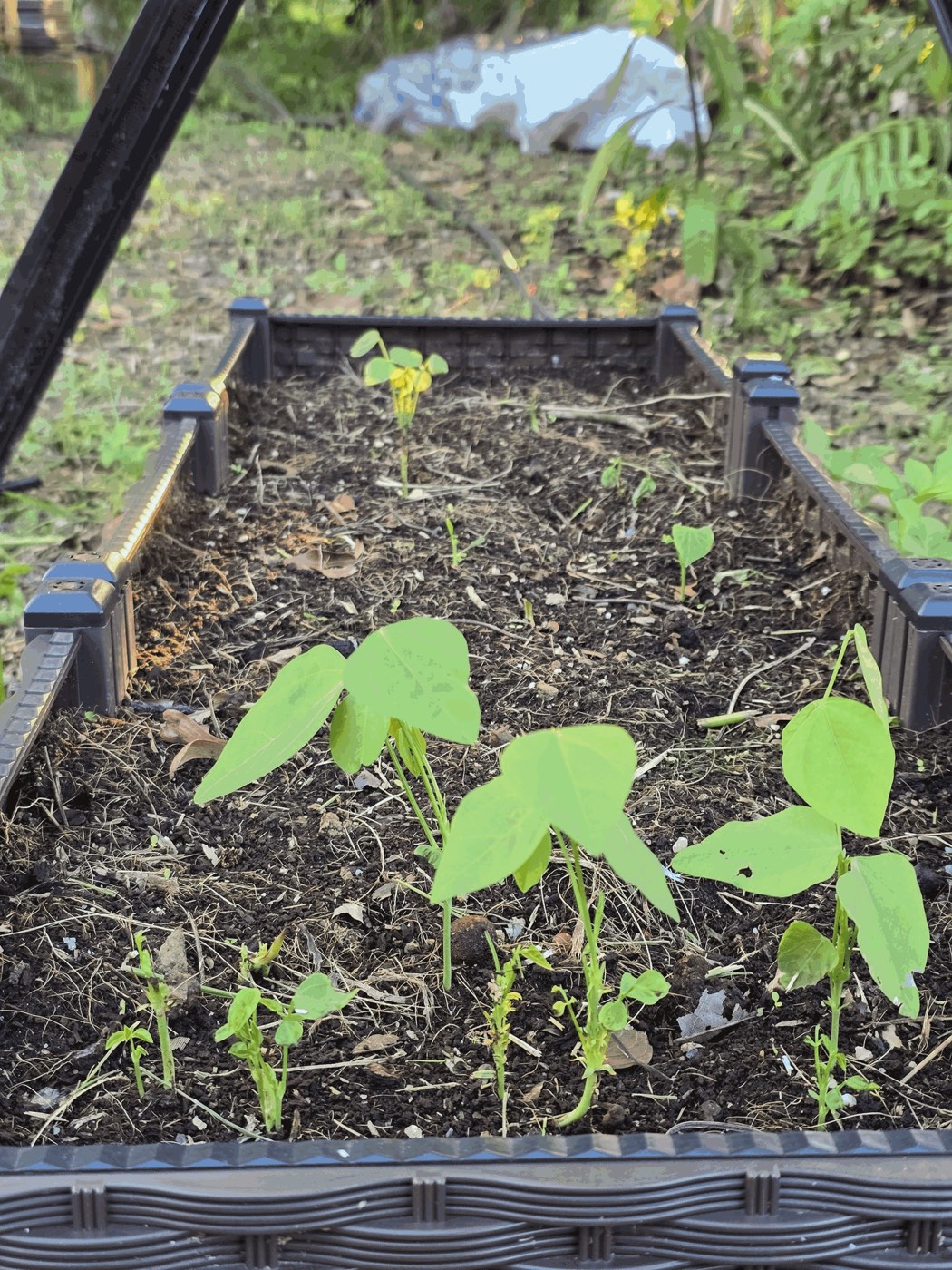
Young winged bean seedlings in a raised bed, each with three broad triangular leaflets

Plate I.

Seedlings in the raised bed, a few days after the first true leaves opened.

Sown here rather than found here, which settles the naming: these came up where winged bean seed went in.

A climbing legume grown as much for the pod as for the plant. The pod is the part everyone knows – flat, about three or four inches long, with four frilled wings running its length and smooth round seeds inside. Picked young they are blanched and eaten with nam phrik, or dropped into a curry. The young leaves go into salad, ripe seeds are roasted, and the tubers are cooked much as cassava or sweet potato would be. Very little of the plant is not food.

The flowers are pale, white washed with purple, and easy to miss against the leaves.

At this stage each seedling is three broad triangular leaflets on a short stem. They will want something to climb before they want anything else.

The particulars

Also called

ถั่วพู (also written ถั่วพลู), winged bean, four-angled bean, Goa bean

Soil

Free-draining. Being a legume it fixes its own nitrogen, so rich soil is wasted on it.

Family

Fabaceae

Toxicity

None. Pods, leaves, flowers, seeds and tubers are all eaten.

Light

Full sun. It climbs, so it wants something to climb before it wants anything else.

Found

Sown in the raised bed, several to a row.

Water

Regular water through the growing season; it sulks in a long dry spell but does not want to sit wet.

Named from

th.wikipedia.org, en.wikipedia.org, powo.science.kew.org

Certainty

High

Named on

9 September 2026

Notes on keeping it

Give it a trellis early. The pods are best picked young, at eight to ten centimetres, while the four frilled edges are still tender – left on the vine they turn stringy within days.

Filed with , ,